In many cases, what makes the difference in horse grooming results is not talent but technique. Observe several skillful groomers at work and you are likely to notice similarities in how they approach their tasks. Many of their hard-earned horse grooming skills come from instruction and practice— but that doesn’t mean you can’t benefit from simply observing and imitating their methods. That’s why we surveyed several first-rate groomers, both professional and amateur, and compiled this list of their seven “habits.” Most of these are relatively simple and require little, if any, extra effort, but employed together they are sure to transform an adequate horse grooming job into an impressive one. Read on to take your skills with a brush and curry to the next level.
1. Use the right tools
If a carpenter is only as good as his tools, so is a groomer. A quick peek into the grooming kit of a highly effective groomer reveals items vital to getting the job done, along with some useful “extras.”
• Currycombs. Traditional curries—hard, black rubber devices with concentric teethed ovals—are the brush of choice for removing dried, caked-on mud from a horse’s coat, or loosening dirt and shedding hair. Newer curries are made of softer rubber and have fingerlike projections that penetrate into the coat. They are less useful for scraping through dried mud, but massage the horse as they dislodge deep dirt. Rubber grooming mitts offer similar benefits and are particularly good for hard-to-curry areas of the legs and belly.
• Brushes. The best groomers have several brushes, each designed to tackle different cleaning challenges. Dandy brushes have stiff to medium bristles, making them good for removing heavier dirt and mud. In fact, if a horse has only small patches of caked-on dirt, a dandy brush can substitute for a currycomb–simply use a quick back-and-forth motion across the soiled area. Body brushes, which have softer, more closely set bristles, pick up finer dirt and dust and distribute natural skin oils that contribute to an overall shine.
• Sponges, rags and wipes. Final touches can make all the difference when it comes to grooming, and the best groomers always have an assortment of clean wiping paraphernalia on hand. Old bath towels cut into small squares are the perfect size for applying silicone sprays or giving a final rubdown to a coat. Disposable grooming wipes, pretreated with a product, are a convenient alternative. It’s best to have at least two sponges—one for the eyes and nose and the other for the dock and udder area—that are color-coded to avoid confusing which is to be used where.
• Silicone spray. You can make a horse look slick and shiny just through skillful grooming, but silicone spray makes it a lot easier. Effective groomers utilize these products in many ways. Spritzed on the surface of a body brush, silicone sprays act as a magnet for coat-dulling dust. Applied to a tail, they help detangle strands while minimizing breakage. And sprayed as a finishing touch, they add shine and coat each hair shaft so dirt slides off. Savvy groomers know silicone sprays don’t replace grooming time and effort, but they do maximize their benefits
2. Lay on the elbow grease
For evidence of another effective grooming habit, check out your friend’s toned biceps: Good grooming is hard work. The best currying job, for example, has some muscle behind it. You need to apply some pressure to reach embedded dirt or release as much of the dead hair as possible. In addition, this massaging action stimulates circulation and releases the natural oils.
But brushing is less a matter of strength than stamina. A few quick flicks of the dandy brush over the body will only get a horse “surface clean.” For best results, you’ll need to apply multiple short, swift strokes that follow the direction the hair lies. End each stroke with an upward flick to pull the dirt out of the coat. Work from the front of the horse to the back, ultimately pushing dirt off the horse’s rump.
Alternate brushing arms as you work. Not only will you reduce fatigue, but you’ll build up your own muscles more symmetrically. (Of course, a grooming vacuum can replace the brushes entirely, but you won’t get the skin massage and dispersal of oils that vigorous brushing provides.)
Once you’ve finished with the dandy brush, pick up the body brush and repeat the entire process. This softer brush flattens the coat, picks up dust and brings out the shine. The more strokes you can get in, the better your results will be. Keep a curry in your opposite hand and wipe the dandy brush on it after every few strokes to clean off the dirt as you go. In thin-skinned horses or during the summer months when coats are sparse, it may be the only brush you’ll need.
When your arms feel like lead, you are nearly done. All that remains is a rubdown with a towel or soft brush to remove any remaining dust. Use short strokes that follow the hair growth.
3. Shampoo sparingly
You won’t see the most effective groomers toiling in the wash stall very often. That’s because they know hitting the suds too frequently can do more harm than good, stripping away the natural skin oil (sebum) that gives a coat its shine. Sebum also protects the skin from insects and hosts friendly bacteria that help keep harmful fungi, parasites and other pathogens at bay.
Too many soapy baths will also leave the horse’s skin dry and itchy, which may cause him to rub his skin, mane and tail. As an alternative to bathing, effective groomers are more likely to rinse a horse with plain water to get rid of minor dirt or sponge him down with a liniment after a workout. But when a real cleansing is needed, it’s important to choose the right products. There are shampoos formulated for frequent use, deep cleaning, to enhance light or dark coat colors, or block ultraviolet rays.
When using a new type of shampoo, it’s smart to try it on a small area of your horse’s body and wait 24 hours to check for an allergic reaction before proceeding. Some horses have sensitive skin and may break out in hives when exposed to certain ingredients.
At bath time, use the minimum amount of shampoo specified on the bottle—usually one capful in a bucket of water. Instead of applying shampoo directly on a wet coat, put it in a bucket of water and sponge it on. This will distribute it more evenly and make it easier to rinse.
For an especially dirty coat, scrub with a currycomb or grooming mitt. When you are finished with the suds, rinse, rinse and rinse again. This task is easier with a watering “gun,” which has several speed and spray settings. You can widen the stream to cover larger areas, like the barrel and flanks, then soften the flow for sensitive spots. You’re not done with this step until you use a sweat scraper and not a single soap bubble appears.
The bathing secret of many great groomers is a finishing rinse—a quick sponge down with water containing a conditioner or light oil to replace whatever shine the soap may have taken away.
4. Handle manes and tails with care
The crowning glory of any well-groomed horse is a thick, flowing tail and a full, healthy mane. Good groomers take a literal “hands-on” approach to achieving both, because they know the most effective tools for detangling the mane and tail are their own fingers. For best results, start by dousing the mane and tail in a detangler, such as a conditioner or a silicone spray. Then “comb” through sections of hair with your fingers, stopping to gently massage out tough knots and burrs. Use a comb only after you’ve finished with your “finger grooming.” Start at the bottom and work your way upward.
If you’ve washed your horse’s mane and tail, rinse thoroughly. Like soap residue on a coat, suds left in a mane or tail will leave it dull and itchy. A horse who rubs his tail or crest in an effort to find relief can leave ugly bald patches, and the hairs may not grow back as readily as those on the body.
5. Feed for a good coat
Great groomers are usually astute horsepeople. They know no amount of grooming or application of hair-care products will make a horse look good if his diet is lacking in key nutrients. They will notice a lack of luster in their horses and consult with their veterinarian to rule out health issues, such as Cushing’s syndrome or internal parasites, that can lead to a dull coat.
In addition to diagnosing and treating any illnesses, a veterinarian can also review a horse’s diet and suggest adding a supplement to support skin and coat health. Dozens of commercial formulas for enhancing coat health and shine are on the market. Common ingredients include omega fatty acids as well as vitamins and minerals to support general health, and biotin, a B vitamin that contributes to the health of skin and hoof horn. Vegetable oils can also add shine to a horse’s coat—consider pouring a tablespoon or two of corn oil over his feed daily.
6. Trim carefully
Effective groomers can wield clippers in a way that accentuates a horse’s conformation and keeps him looking tidy without compromising his well-being. Show standards dictate some clipping conventions, but if your only goal is a good-looking pleasure horse, follow these guidelines:
• Trim the long hairs under the jaw for a tidy profile. Botflies like to lay their eggs on these long hairs, so keeping them short helps deter these pests. A close trim will also help you detect and treat any scabs and scurf left by black flies and gnats, which like to congregate in this area in hot weather.
• Leave the long hairs around a horse’s eyes alone. These are tactile hairs, known as vibrissae, similar to a cat’s whiskers in their sensitivity. They protect the eyes by triggering the blink reflex when something touches them.
• You can tidy up muzzle hairs that are extremely long, but these are vibrissae as well, so leave several inches intact to help your horse explore what is directly under his nose, such as delicate blades of grass.
• Clip very fuzzy ears by pinching them closed and trimming only those hairs that protrude beyond the edges. Do not clip out the interiors of the ears—those hairs protect against insects and are best left alone.
• Trim fetlocks with electric trimmers in a downward direction, following the growth of hair. Clip any tufts of hair high up on the cannon bone and behind the knee in the same manner.
• Trim the long “cat” hairs under the belly of older or shedding horses by running the trimmers in the direction of the hair, just below the surface of the coat. In many cases, a shedding blade alone will remove these.
7. Be consistent
Effective groomers approach their tasks with vision and purpose. To them, a grooming session is more than “knocking the dirt off” the saddle area before tacking up—it’s an all-over body treatment designed to not only make a horse look his best, but to lay the groundwork to keep him looking good again tomorrow.
They pay as much attention to a horse’s coat each day as they do his legs, lungs or eyes. In addition to regular daily grooming sessions, they pick up a brush in the idle moments of the day and use it as a tool to learn more about their horse. They know a horse’s ticklish parts and itchy spots and can tell you just how long he’s had that scab on his hindquarters or when that rub spot appeared on his shoulders. In other words, the secret to highly effective grooming is essentially highly effective horsemanship.
http://www.equisearch.com/horses_care/7-habits-for-highly-effective-horse-grooming/

Groupon: $79 for Wenger Swiss Military Watch Gift Set


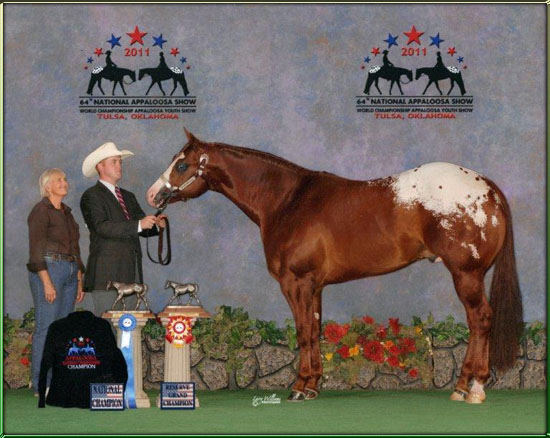


 King Plaudit (Red Plaudit x Cheyenne Maid), foaled in May of 1964, was a product of the legendary Colorado horseman Hank Wiescamp’s breeding program. A chestnut with a large white blanket accentuated by a blaze face and four white stockings, King Plaudit was sired by Weiscamp’s stallion Red Plaudit, making him a paternal half-brother to future Appaloosa superstar Prince Plaudit. But King Plaudit was able to make his mark on the Appaloosa breed on his own terms—he was a sterling example of quality and type, with eye-catching Appaloosa color to boot. King Plaudit soon attracted the interest of Wallace Barbee, a Missouri horseman looking to take his Appaloosa breeding program to the next level. After visiting Wiescamp’s Colorado ranch, Wallace purchased the young colt and began showing him at halter to great success—33 undefeated halter titles in one year.
 The 2005 stallion Chocolatey has been successful at the Appaloosa National and World shows and also on the Open circuit. Making an impact in western pleasure classes at prestigious events like the Southern Belle and Reichart shows, Chocolatey is a great ambassador for the breed.


